
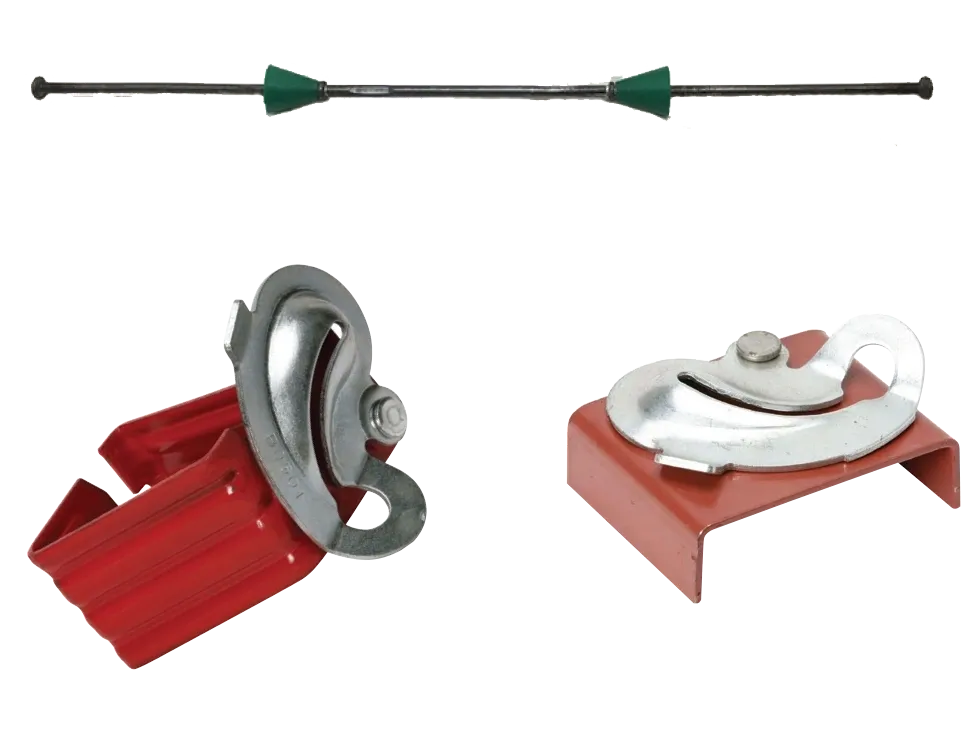
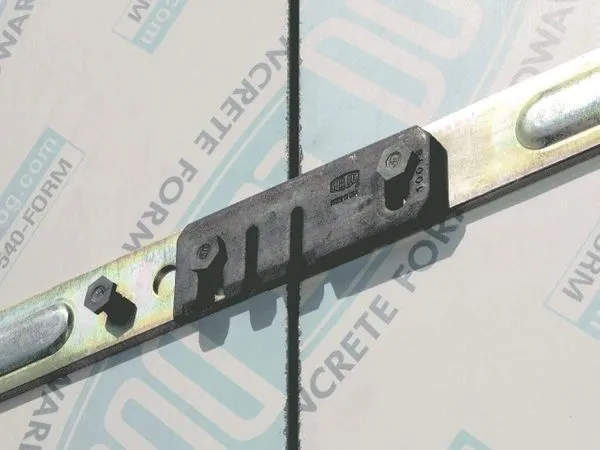
Jahn-A Bracket is fabricated from high strength steel with a cad plated eccentric and painted body. The 5/8″ take-up of the eccentric compensates for minor lumber variations in thickness. This Jahn-A Made in China: Bracket can be utilized to hold a single horizontal wale or a single vertical stud with any type of wall form; round, curved, battered, beam and/or columns.
Overview: The Jahn-A Bracket can be installed before or after the wales have been positioned. The slots in the bracket allow it to slip over the snap tie end without laborious threading through holes. When properly installed, the ACLMP bracket will not loosen from internal vibration of the concrete. Pressure from the bracket is against the 2 x 4 instead of the plywood. The A CLMP bracket uses 4-3/4″ L&W snap ties, is easy to install and strip, requires no nailing and is very fast.
Choosing panels
When planning multiple reuses, it is best to use plywood with more durable construction. All Plyform panels have more solid and stronger veneers than traditional sheathing panels, offered in a range of durability. These panels are rated as Class I, which means they are manufactured with the strongest and stiffest veneers. The grades of veneer used in Plyform panels are indicated in the APA trademark.
MDO and HDO overlaid panels have resin-impregnated cellulose fiber sheets laminated to their faces, and can have either single- or double-sided faces. With careful handling and maintenance, any double-faced forming panel, from B-B Plyform to the overlaid panels, can be poured against on both sides.
HDO forming panels have a greater amount of resin in the overlay; their surfaces are harder and more impervious to water and impacts than MDO forming panels. A greater number of uses and smoother finish on the surface of the concrete can be expected when using HDO Plyform.
Forming panels with MDO faces are often only overlaid on one side, but may have pourable faces on both sides of the panels. While MDO surfaces are not as smooth and durable as HDO panels, a contractor should expect to get more pours from them than the panels without overlay or other surface treatment. The finish of the concrete from an MDO surface will be softer and not as slick as that formed against HDO panels.
How many pours can you get from a concrete form panel?
The question of how many pours are achievable with a single concrete form panel depends not only on the product itself, but also its care and maintenance. Nearly all types of plywood panels can be used in concrete-forming, from common roof and wall sheathing to sanded panels. APA Plyform panels, however, are specifically designed to withstand the wear-and-tear of repeated concrete pours, as well as to provide a smoother and more consistent finish to the concrete’s surface.
Many factors can affect the number of pours anticipated from concrete-forming plywood, including:
desired finish on the concrete; durability of the panel’s surface, including overlays; types of concrete formulation; and which release agents are used.
The most critical factor is the handling and care of the form panels.
With reasonable maintenance, more than five pours can be expected from a B-B grade Plyform, while HDO panels can withstand up to 20 to 50 reuses, and MDO Plyform somewhere in between. In fact, with proper care, some proprietary concrete-forming panels can achieve more than 100 reuses.
Caring for the panels 101
One can optimize the life and performance of forming panels if they are adequately maintained. Here are some commonsense considerations: apply a release agent prior to every pour;
only use non-ferrous wedges and tools (e.g. wood or softer plastics) to remove excess concrete from the faces and edges of the panels; keep the panels stored face to face to protect cleaned surfaces;
protect vulnerable corners and edges of panels during removal and handling; if form panels are cut, reseal the ends and edges to protect them from excessive moisture; and
consider admixtures in concrete formulations when choosing a type of forming panel, understanding that overlaid panels provide greater resistance to chemicals.
To determine the optimal panel for an application, design/construction professionals can visit PerformancePanels.com to see lists of manufacturers, access product specifications, and read APA’s Concrete Forming Design/Construction Guide.

Reviews
There are no reviews yet.